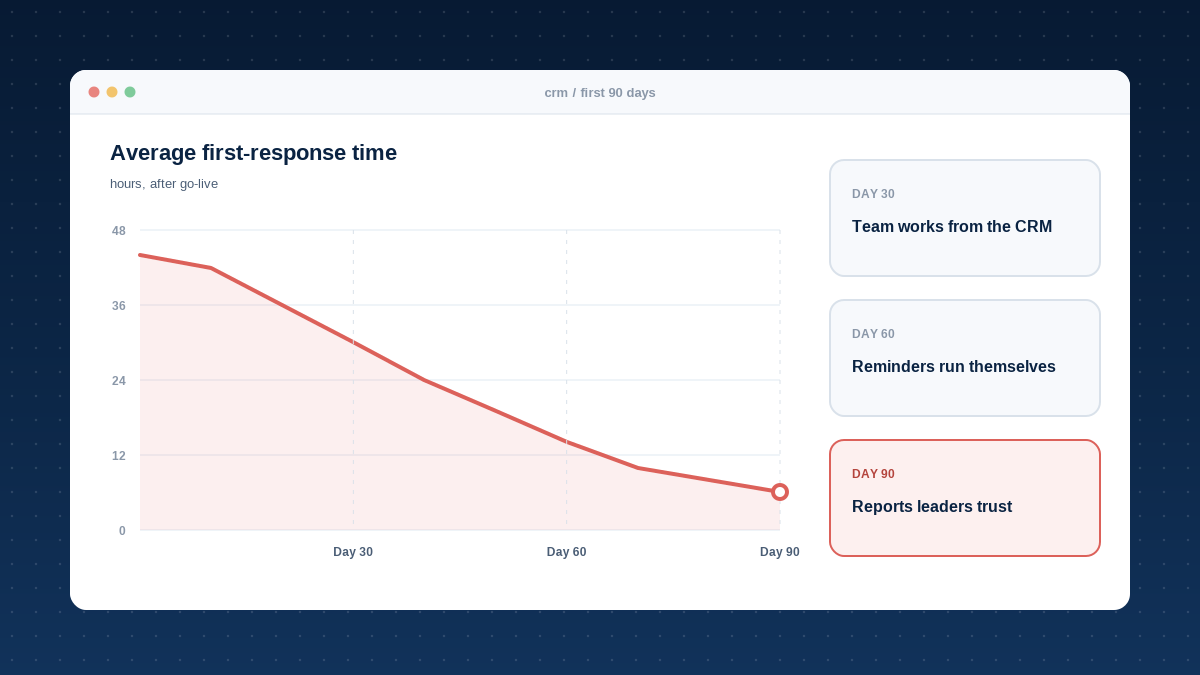
The system is live. The data is in, the team has been trained, and from Monday everyone is supposed to work from the CRM and not from their inbox. The next three months decide whether the project was worth it. (How you get to this point is covered separately.)
Before day one: write down two numbers
Pick one or two things you want to improve and note where they stand today. How long does a new inquiry wait for a reply? How many quotes go without a follow-up each month? Without a starting number, month three turns into an argument about impressions.
Days 1 to 30: habits
The first month is about one thing: people opening the CRM first. Expect some grumbling. Any new tool is slower than the old way for a few weeks, and that passes.
What moves it along is the owner asking "what does the CRM say?" in every meeting. If the answer keeps mattering, people keep it up to date.
Fix the awkward bits fast, too. A field that confuses people or a step that feels pointless should be changed that week. Small annoyances left alone become workarounds, and workarounds become the real system.
Days 31 to 60: let it do more
Once people trust the records, start handing routine jobs to the system. These are the ones we'd start with.
Add them one at a time. If three automations go live in the same week and something odd happens, nobody can tell which one did it.
Days 61 to 90: the reports start to mean something
With two months of clean data you can see which leads turn into paying customers, the stage where deals usually go cold, and how quickly your team gets back to people. Now pull out the two numbers from before day one and compare.
Realistic by day 90
- Fewer lost or forgotten inquiries
- Faster first replies
- Anyone can answer a customer's question
- A pipeline you can read at a glance
Takes longer
- Big shifts in revenue
- Reliable long-range forecasts
- Changing every process at once
Why it stalls
Two things are usually behind it. The first is that nobody owns the system, so nobody keeps it tidy or notices when it drifts. Give it to a named person.
The second is that the old spreadsheet survives. If the list still exists, people will use it. Retire it on a stated date, and say so out loud.
If your CRM went live a long time ago and never got past month one, start here instead.