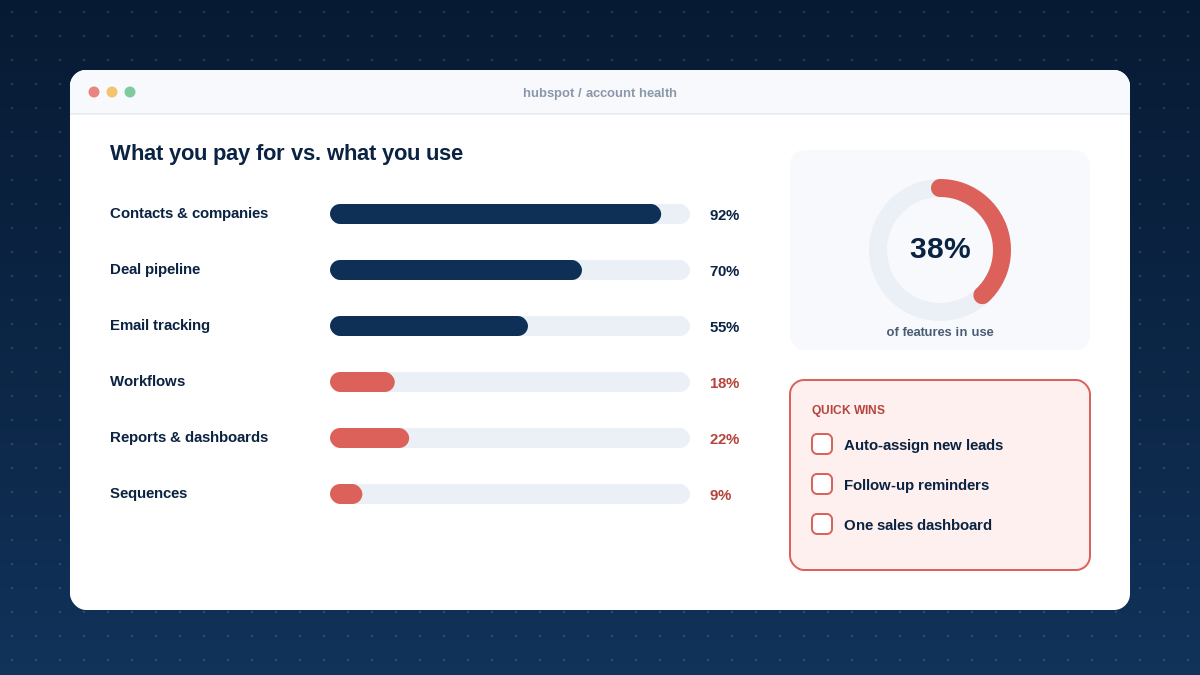
"We're paying for HubSpot, and honestly we mostly use it as a contact list." If that's you, more software won't fix it, and another training session won't either. The portal needs a plan it never had.
The problem
Most portals weren't designed. They were switched on. Someone imported a spreadsheet, added fields as questions came up, and the team used it in whatever way made sense to each of them. A year on:
- Everyone enters information differently, so the reports don't add up.
- Sales keeps its "real" list in a spreadsheet on the side.
- Workflows and dashboards you pay for have never been turned on.
- Nobody is in charge of the system, so nobody fixes it.
None of that is HubSpot's fault, and none of it is your team's. It's what happens when a tool arrives before anyone has decided how it will be used.
A ten-deal test
Open HubSpot and pull up your last ten closed deals, won or lost. Don't pick the good ones; take them in the order they closed. For each one, ask whether you can tell from the record alone what happened and what was supposed to happen next. Count the ones where you can.
If it's fewer than half, the records aren't carrying the story, and everything built on them is guessing: the reports, the automations, the forecast. That is the place to begin, before any feature gets switched on.
What we'd fix, and in what order
- Decide what you want more of. One or two things: more quotes turned into sales, faster replies, more repeat orders. Everything in the portal should serve one of them, and what doesn't can go.
- Make the pipeline match how you sell. Stages your team would recognise, each with a clear meaning. A single generic pipeline for every kind of sale is the first thing we'd look at.
- Cut the fields. Keep the short list everyone will actually fill in. Dozens of unused and duplicate fields are a large part of why nobody trusts the reports.
- Build one dashboard. A single one that the team looks at every week, with more to follow only when someone asks for them.
- Then switch on automation. Reminders and routing only help once the records underneath are right. These are the first ones we'd add.
What a clean-up doesn't fix
A tidy portal still fails if people work around it, and that part is habit. This is what to expect there.
And sometimes the ten-deal test goes badly because the portal was built for a business you no longer are. In that case starting again cleanly can cost less than repairing what's there. We'd tell you which one we think it is.